Data & Observational Facilities

Mauna Loa Solar Observatory (MLSO)

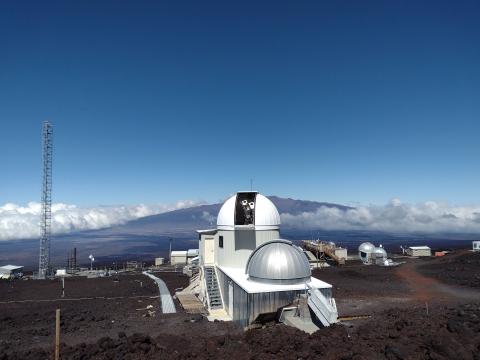
Located at 3440 meters on Mauna Loa, Hawaii, MLSO obtains unique observations of the low and middle corona needed to track the formation and dynamics of coronal mass ejections (CMEs) and the underlying magnetic and plasma conditions that lead to these eruptions. CMEs are the primary driver of severe space weather events.

Get Data

COSMO

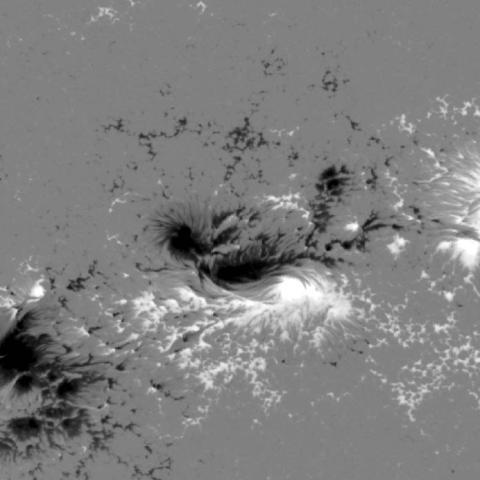
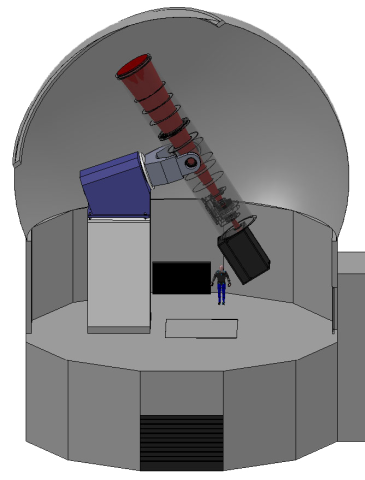
The COronal Solar Magnetism Observatory (COSMO) offers the potential to transform our fundamental understanding of magnetic fields in the Sun’s atmosphere. These magnetic fields drive the formation of solar eruptions and other space weather events that can affect technologies, and therefore the lives and livelihoods of people, on Earth.

Community Spectro-polarimetric Analysis Center (CSAC)

The Community Spectro-polarimetric Analysis Center (CSAC) is an HAO/NCAR Strategic Initiative that has its roots in HAO's long-standing expertise in the development of spectro-polarimeters and the interpretation of polarized radiation for remote sensing of magnetic fields in the Sun's atmosphere. 

Get Data

Fabry-Perot Interferometers

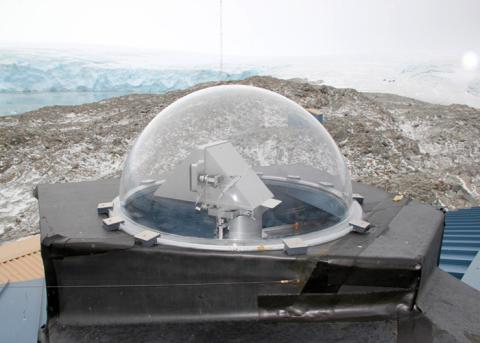
The Palmer Fabry Perot interferometer (FPI) measures the mesospheric and thermospheric winds by monitoring the wind induced Doppler shift in the nightglow emissions. Nightglows are lights emitted by atmospheric atoms such as O and molecules (e.g. OH).

Get Data

HAO Eclipse Data

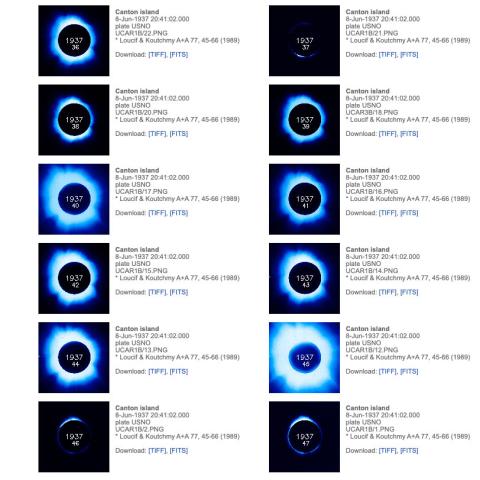
Here you will find access to eclipse images and data taken during HAO eclipse expeditions, as well as access to our Eclipse Archive, an archive of images of solar eclipses starting in 1869 which are deemed to be of sufficient quality for research.

Get Data

The McIntosh Archive of Synoptic Maps (McA)

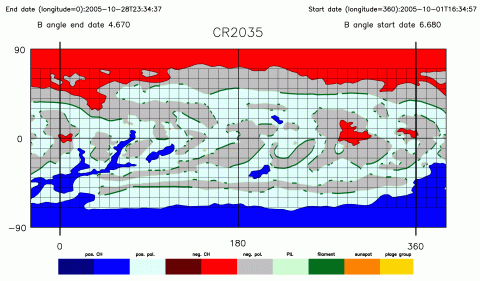
In 1964, Patrick McIntosh, a scientist at NOAA’s Space Environment Center in Boulder, CO, began creating hand-drawn synoptic maps of solar magnetic features. In all, he compiled ~45 years or nearly four complete solar sunspot cycles of maps, representing a unique record of the large-scale organization and variation of the Sun’s magnetic field.

Get Data

The NCAR Vacuum Tunnel Facility (NVTF)

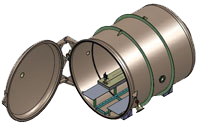
The NVTF, managed by HAO, is a unique facility that consists of a class 10,000 clean room and a coronagraph calibration chamber. This chamber has been used to calibrate instruments such as the ATM/Skylab Coronagraph, the Solar Maximum Mission Coronagraph/Polarimeter, the Spartan 201 White Light Coronagraph, and COR-1.
Solar Maximum Mission (SMM)

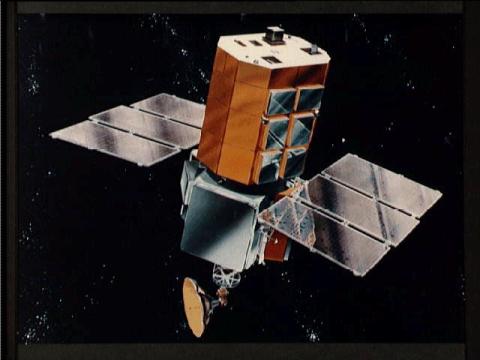
The Solar Maximum Mission (SMM) observatory was launched by a Delta rocket on February 14, 1980, from Cape Canaveral, Florida.

Get Data

The Sun Today

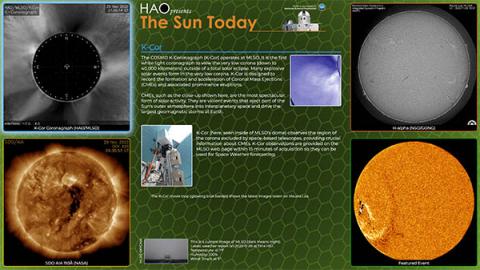
A dashboard-style display showing most recent MLSO data along with SDO, GONG, and solar event images.

WindCube

WindCube is a 6-U CubeSat mission in low earth orbit that will study the influence of thermospheric winds on the earth’s ionosphere. WindCube will address a key science goal in the NASA Decadal survey.

The Lyot Filter Demonstration Instrument (LFDI)

The Lyot Filter Demonstration Instrument is a technology advancement effort.  When completed in late 2024, it will be a validation of a temperature-compensated, electro-optically tuned, birefringent optical filter.