News & Events
Upcoming Events
Latest News
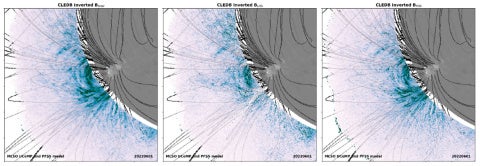
Coronal magnetic fields in 3D
A team of researchers has produced the first global, three-dimensional estimates of the Sun’s magnetic field, including the area beyond the Sun’s visible edge. This breakthrough marks an important step towards more accurate models of solar activity — and ultimately, better predictions of solar magnetic eruptions which are the root cause of extreme space weather that can impact critical infrastructure technologies on Earth.
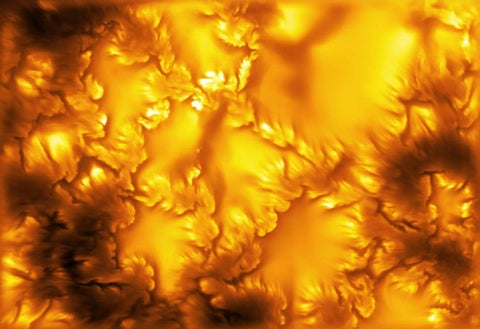
Scientists announce discovery of a hidden solar process
An international team of scientists, including HAO scientist Matthias Rempel, has announced the discovery of Kelvin-Helmholtz instability (KHI) in the form of small, swirling, whirlpool-like patterns on the surface of the Sun. The research indicates that KHI might be a key reason why the Sun's outer atmosphere gets so hot, and why magnetic energy builds up and moves around on the Sun, ultimately fueling solar flares and eruptions that can affect Earth.

HAO Interim Director, Mike Wiltberger
We welcome Dr. Mike Wiltberger as HAO Interim Director. His 22 years at HAO, combined with his scientific expertise and inter‑agency experience at NSF, make him exceptionally well prepared for this leadership role.
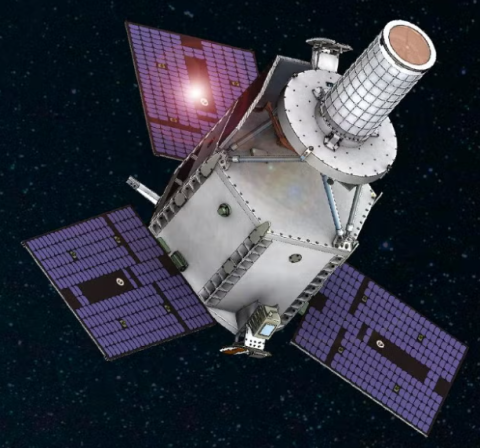
NASA selects NSF NCAR Heliophysics Mission for Continued Development
In December 2025, NASA selected the Chromospheric Magnetism Explorer (CMEx) for an extended period of concept development. The $150 million mission would fill a critical solar observational gap, generating information on conditions that lead to solar eruptions, advancing our knowledge of the solar magnetic field, and improving space weather modeling capabilities. It would also be the first Explorer-sized spacecraft mission ever led by NSF NCAR.