Haonan Wu
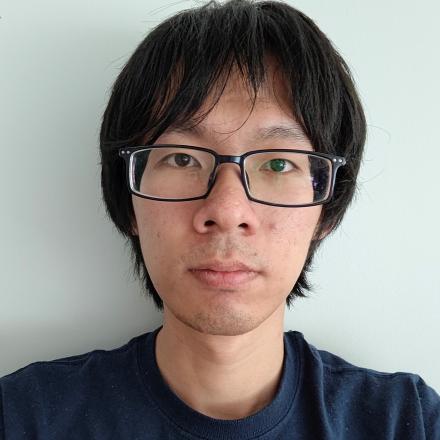
My research focuses on energy and momentum deposition processes in the upper atmosphere, with an emphasis on understanding the underlying physical mechanisms through numerical modeling and methodological development. A central theme of my work is the advancement of computational tools that improve our ability to characterize and predict the coupled geospace environment.
I adapted a multi-resolution data assimilation technique, Lattice Kriging, to improve the quantification of particle precipitation and convection electric fields. I am also one of the principal developers of the Thermosphere-Ionosphere-Electrodynamics General Circulation Model (TIEGCM) and contributed to the recent release of TIEGCM 3.0. In addition, I independently developed a nesting capability for TIEGCM that enables more realistic simulations of geospace variability driven by both solar storms and terrestrial weather. More recently, my work has focused on the development of a global electrodynamic solver, SMITE, and its integration with the Multi-scale Atmosphere-Geospace Environment (MAGE) model.
I have also applied machine learning techniques, including convolutional long short-term memory (ConvLSTM) neural networks, to predict ionospheric electron density. I continue to explore physics-informed and data-driven machine learning approaches that can enhance space weather modeling, forecasting, and scientific discovery.