Upcoming Events
Colloquium: Inferring atomic data from solar observations - Mar 11, 2026
Colloquium: Cross-Scale Wave-Wave Interactions in the Atmosphere-Ionosphere Vertical Coupling - Mar 18, 2026
Latest News

HAO Interim Director, Mike Wiltberger
We welcome Dr. Mike Wiltberger as HAO Interim Director. His 22 years at HAO, combined with his scientific expertise and inter‑agency experience at NSF, make him exceptionally well prepared for this leadership role.
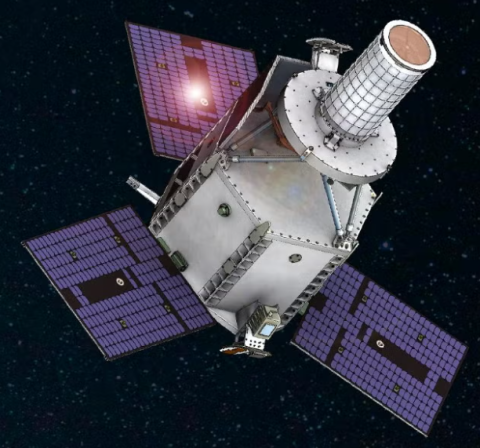
NASA selects NSF NCAR Heliophysics Mission for Continued Development
In December 2025, NASA selected the Chromospheric Magnetism Explorer (CMEx) for an extended period of concept development. The $150 million mission would fill a critical solar observational gap, generating information on conditions that lead to solar eruptions, advancing our knowledge of the solar magnetic field, and improving space weather modeling capabilities. It would also be the first Explorer-sized spacecraft mission ever led by NSF NCAR.
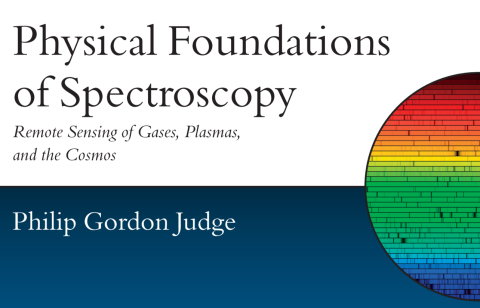
July book release: "Physical Foundations of Spectroscopy" by Philip Judge
"Physical foundations of spectroscopy," by Philip Judge, highlights how spectroscopy is firmly anchored in physical foundations, countering modern trends leading to over-specialization. Published by Oxford University Press as a text in their master series in particle physics, astrophysics and cosmology.
Latest Research Highlights

Near-Ultraviolet Spectropolarimetry as a tracer of Magnetic Markers of Flux Rope Formation
Authors D. Afonso Delgado, R. Centeno, R. Casini, and M. Rempel investigate the suitability of the combined spectral windows of Mg II h and k and the Fe II lines around 261 nm as magnetic markers of filament formation.

Polarization Diagnostics Applied to Coronal Mass Ejections and the Background Solar Wind
Sarah E Gibson, Craig E. DeForest, Curt A. de Koning, Steven R. Cranmer, Yuhong Fan, Huw Morgan, Elena Provornikova, Anna Malanushenko, and David Webb use PUNCH polarization data to analyze individual lines of sight to three-dimensional models of coronal mass ejections (CMEs), allowing consideration of how accurately polarization properties of the transient and quiescent solar wind are diagnosed.

Advancing Heliophysics and Space Weather Modeling through Open Science
HAO first author, Michael Wiltberger, et. al. highlight a community-wide effort to understand how “open science” practices can better support research and forecasting in heliophysics and space weather.