Upcoming Events
Colloquium: The improvements to the next-gen TIEGCM - Sep 2, 2026
Workshop: 2026 Boulder Solar Day - Sep 24, 2026
Latest News

HAO Interim Director, Mike Wiltberger
We welcome Dr. Mike Wiltberger as HAO Interim Director. His 22 years at HAO, combined with his scientific expertise and inter‑agency experience at NSF, make him exceptionally well prepared for this leadership role.
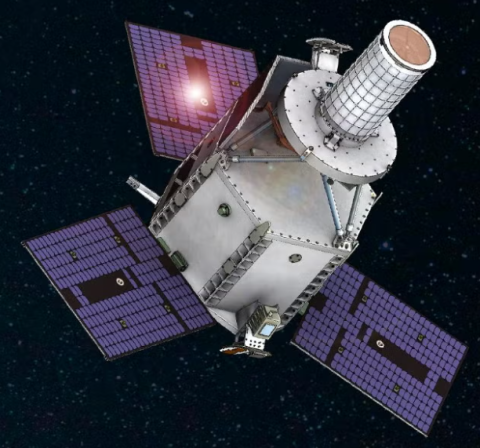
NASA selects NSF NCAR Heliophysics Mission for Continued Development
In December 2025, NASA selected the Chromospheric Magnetism Explorer (CMEx) for an extended period of concept development. The $150 million mission would fill a critical solar observational gap, generating information on conditions that lead to solar eruptions, advancing our knowledge of the solar magnetic field, and improving space weather modeling capabilities. It would also be the first Explorer-sized spacecraft mission ever led by NSF NCAR.
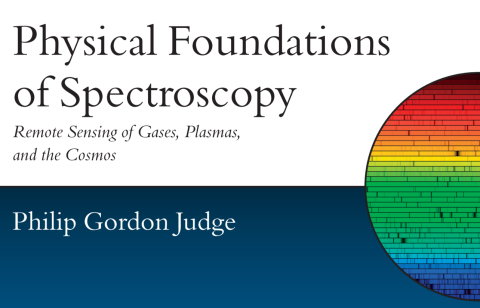
July book release: "Physical Foundations of Spectroscopy" by Philip Judge
"Physical foundations of spectroscopy," by Philip Judge, highlights how spectroscopy is firmly anchored in physical foundations, countering modern trends leading to over-specialization. Published by Oxford University Press as a text in their master series in particle physics, astrophysics and cosmology.
Latest Research Highlights
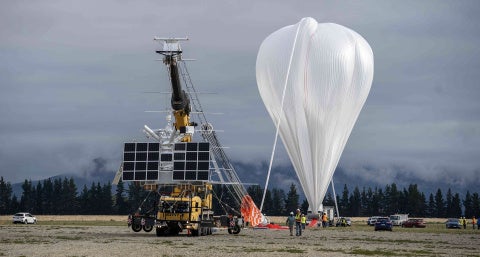
HIWIND observation of daytime thermospheric winds over New Zealand and comparison with model simulation
A balloon-borne instrument called HIWIND was launched from New Zealand to observe thermospheric winds in the mid-latitudes. The observed winds were compared with TIEGCM model simulation and were found to be much larger than the simulated results.
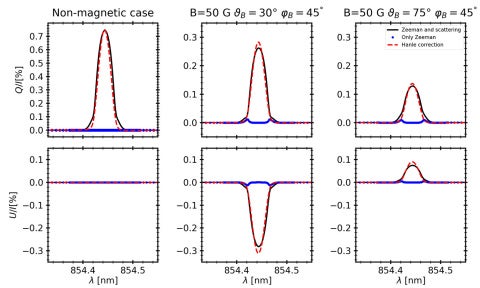
Slab model of the Hanle effect for magnetic sensitive chromospheric lines
D. Afonso Delgado addresses the need to model the effects of radiation anisotropy and atomic coherence on the Stokes profiles
of magnetically-sensitive lines formed in the solar chromosphere. Accounting for the physics of scattering polarization associated with these effects, and how they map to the strength and direction of weak magnetic fields on the Sun is a formidable computational task when done fully self-consistently. This has hindered the broad heliophysics community from gaining prompt access to reliable data products from solar facility spectro-polarimeters concerning quiet-Sun magnetism.
Optimal Polarization Modulation and Calibration Schemes
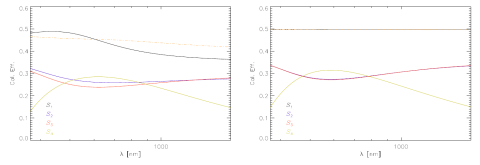
Authors R. Casini, D. Harrington, and A. de Wijn review the algebraic definition of the efficiency of a polarization modulation scheme, which is commonly adopted for solar and stellar spectro-polarimetry applications, and generalize it to allow distinct states of the modulation cycle to have arbitrary throughput and different photon-noise statistics for each state.